A First Visit to a Stadium: A Plan for Taking in the Whole Ground
A first visit to a stadium feels less hurried with a simple route for noticing the approach, entrance, concourse and view from your seat.
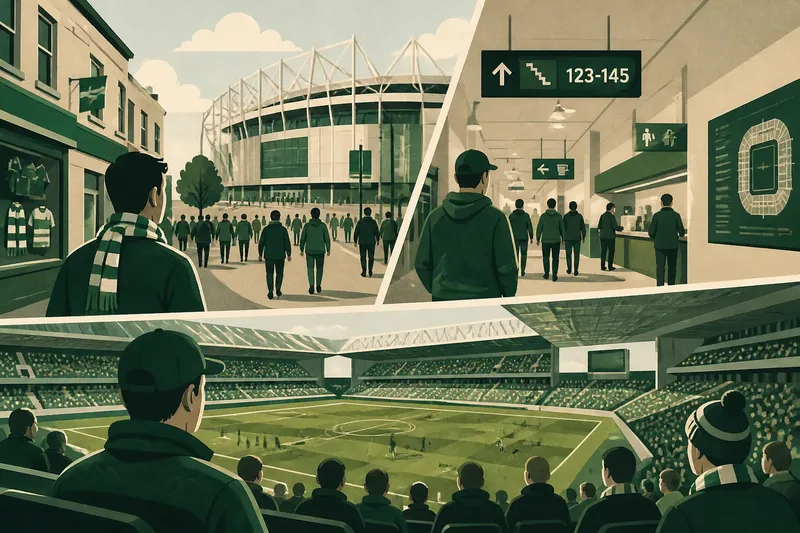
Where should you look first on a first visit to a stadium, and how do you take in the ground without spending the match craning your neck? Give each part of the visit a small job: notice how the venue meets the streets, find your way inside, pause on the concourse, then settle into the view from your seat. You do not need to memorise every detail; a few deliberate pauses will give the place a shape.
This is a way to watch the setting as well as the game. Keep your match ticket and route details handy, arrive with enough time to find your entrance without rushing, and let the sequence below guide your attention rather than dictate your pace.
Let the approach reveal where the stadium begins
Start noticing the ground before you reach its walls. From a station, bus stop or familiar street, look for the first signs that the match is gathering: scarves in shop windows, temporary signs, stewarded routes or a stream of people turning towards the same corner. The venue’s presence often arrives gradually, through the neighbourhood, rather than all at once.
As you draw nearer, look at how the stadium touches the streets around it. Is a broad plaza drawing people towards the entrance, or does the building appear between ordinary shopfronts? Notice where the outer wall bends, where a canopy begins and whether the crowd is spreading across several approaches or converging on one.
Take a moment to look back along the route you came. That simple glance can help you remember the nearby landmarks for the journey out, and it gives you a view of how the venue sits within its surroundings. Keep moving with the crowd where the path is busy; save any longer pause for a clear space out of the way.
Use the entrance as your first point of orientation
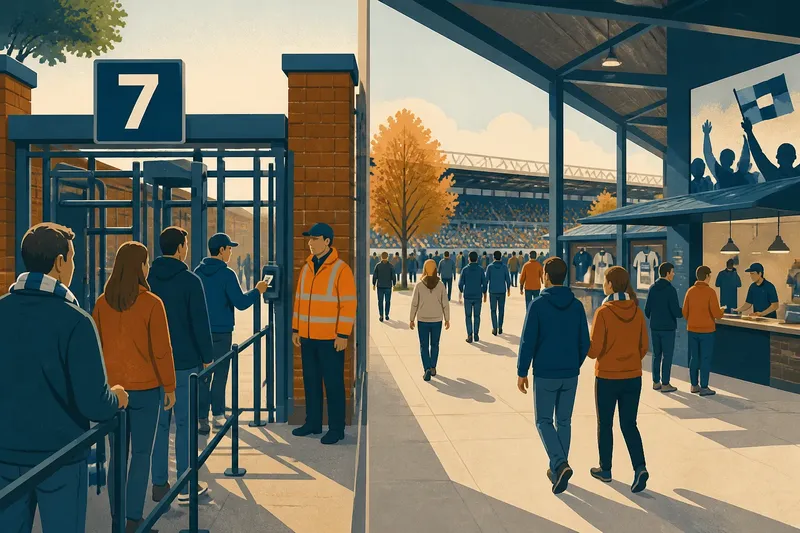
Before joining a queue, check the section or gate information on your ticket and compare it with the signs in front of you. Large stadiums may have several entrances that look similar from outside but lead towards different seating areas. If the signs and your ticket seem to disagree, ask a steward rather than guessing or following someone who happens to be heading in the same direction.
At the entrance, notice the transition from street to ground: the change in light, the sound of voices, or the way the exterior gives way to an enclosed passage. These are useful landmarks, but do not stop in a doorway or at the top of a queue to study them. Once you are through and clear of the flow, take a brief look around.
Find the nearest sign that names your seating section and note a dependable reference point nearby, such as a numbered stair, a prominent concession stand or a large directional board. You do not need to memorise the whole signage system. One clear landmark can help you recognise the route back from the concourse.
Read the concourse as a route, not a room
The concourse is often where a first-time visitor feels most tempted to hurry. People are heading for seats, food, facilities and friends, and the route may curve behind the stands rather than run straight towards your section. Instead of trying to understand everything at once, read the signs in the order you need them: first your block or section, then the stair or row access.
Look for the way the concourse is organised. A long, open stretch may offer a view towards the pitch or outside, while a tighter corridor may rely on overhead signs and numbered doors. Notice where the route changes direction and whether the same section markers appear again after a turn. Repeated signs are reassuring: they let you check your direction without stopping to trace the whole building.
If you want to look at a display, food counter or window onto the field, do it from the side of the walking route. People behind you may be trying to reach their places, and queues can spill across a passage. It is not worth trying to inspect every mural, sponsor board or stairwell before kick-off. Choose one detail that catches your eye, then keep moving until you have found your section.
What should you notice before taking your seat?
Should you find your seat before exploring?
Yes, especially if the venue is unfamiliar or the crowd is building. Find the block, row and seat first; once you know where you will return, you can take a short look around without worrying that you have lost your bearings.
What should you do if your ticket details are unclear?
Check the ticket and nearby section signs, then ask a steward or venue staff member before entering a seating aisle. A quick question is easier than trying to work backwards through a busy concourse.
Can you take photographs while finding your way?
You can, if the route is clear and venue rules allow it, but step aside before stopping. A photograph of a distinctive sign or concourse feature can help you remember it; taking pictures while walking through a crowd can distract you and others.
Let the seat show you how the ground is arranged
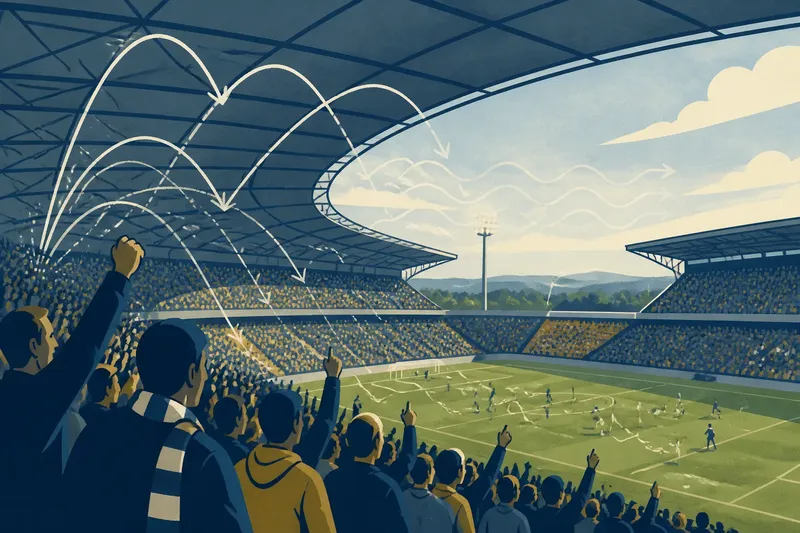
Once you reach your row, settle your belongings and look first at the field, not at every detail around it. Notice the broad relationship between the playing area and the stands: where the far touchline sits, how the corners connect the sections, and whether the roof or upper tiers enter your view. This gives you a basic map of the ground from the place you will actually watch.
Then take in the view in layers. Start at the nearest edge of the pitch, move your eyes across to the far stand, and finish by looking up towards the roofline or open sky. You may notice that a scoreboard, screen or support column sits within your sightline. If something important is obscured, shift your posture slightly and check whether the view changes; avoid leaning into another spectator’s space.
Look for one architectural detail that helps explain the character of your stand: a continuous curve of seats, a visible gap between tiers, a low roof edge or an open corner. You do not have to decide whether it is beautiful or unusual. Simply noticing how the structure frames the pitch makes the view feel specific to this seat, rather than like a picture of any stadium.
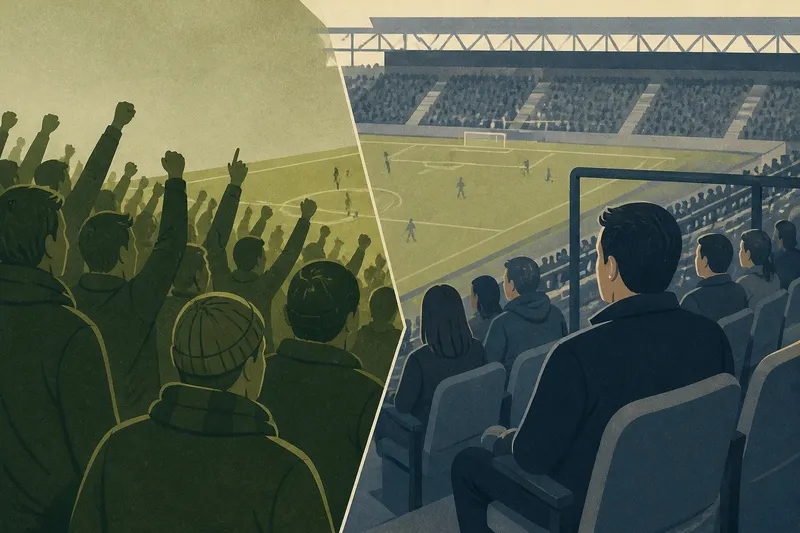
Now turn briefly towards the people around you. Some may be watching the warm-up, discussing the line-up or greeting familiar faces. Let those small routines be part of the view, without assuming that every section behaves in the same way. The stadium is a place people use together, not only a shape around a field.
Keep a small route in mind once the match begins
Before play starts, glance once more at the section marker or stair you used to enter. Notice which direction leads back to the concourse and where the nearest exit signs point. You do not need to trace every possible route, but a familiar landmark can make a later trip for refreshments or facilities less confusing.
Say you are seated in an unfamiliar upper section and a bright sign marks the stair you came up. You could note that sign, settle in, and watch the warm-up; if you later step out to find a drink, the same marker gives you a simple reference when you return. The point is not to build a detailed map, but to keep one reliable feature in mind.
When the match starts, let your attention return to the action. The building will still be there during a natural pause: a stoppage, half-time or moment when play moves to the far end. Use one of those moments to notice how the crowd’s view changes from your seat, rather than trying to watch the match and inspect the architecture at the same time.
Make the exit part of your first impression
At the end, follow the signs and the general movement of spectators, but do not assume the route out will mirror the route in. Barriers, steward directions or crowd management can change which passage is open. If staff direct people elsewhere, follow their instructions and use the signs to find your way rather than retracing a remembered route automatically.
Once you are outside and clear of the entrance, look back at the building. The approach may feel different now that you have seen the field from inside: a stand that appeared solid from the street may have opened into a bright concourse, or the roofline may make more sense after you saw it above your seat. That last glance links the neighbourhood, entrance and viewing place into one experience.
A first visit to a stadium does not need to become a scavenger hunt for architectural details. Notice the approach, confirm your entrance, read the concourse in small pieces and give your seat a quiet moment before the game takes over. If you keep one clear landmark in mind, the ground is easier to revisit in memory—and easier to find your way around while you are there.