From Terraces to Seats: What Changed in the Spectator’s Place?
From terraces to seats changed more than comfort: see how stadium layouts reshaped sightlines, crowd movement and the spectator’s relationship with the field.
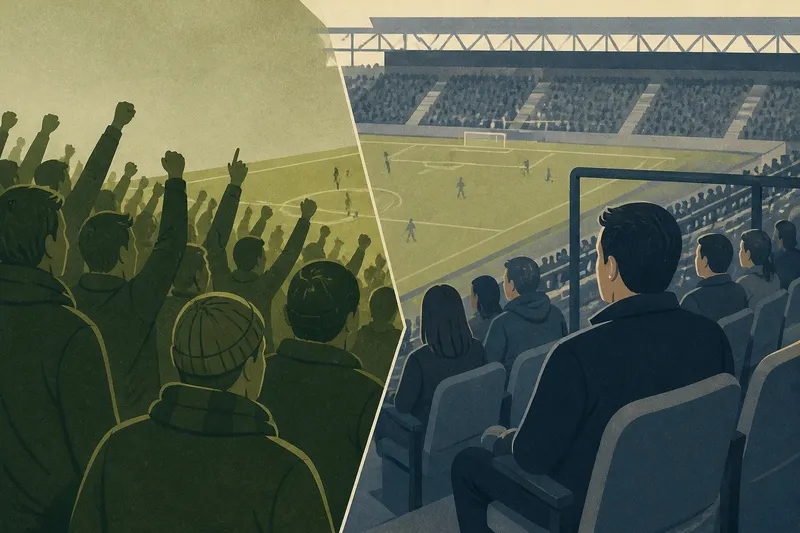
Why does watching from a seat feel different from watching on a terrace, even when the field and match are the same? The shift from terraces to seats changed the spectator’s place in a stadium: where people stood or sat, how they moved, and how closely their actions fitted together. The result is not simply a choice between standing and sitting. It is a different arrangement of bodies around the game.
That change can be easiest to notice when something feels awkward. A spectator cannot see over the person in front, a group loses its shared rhythm, or a route to the pitch seems less direct than the old description of “being on the terrace” suggests. Each problem points to a different part of the relationship between crowd and field.
When the field seems farther away
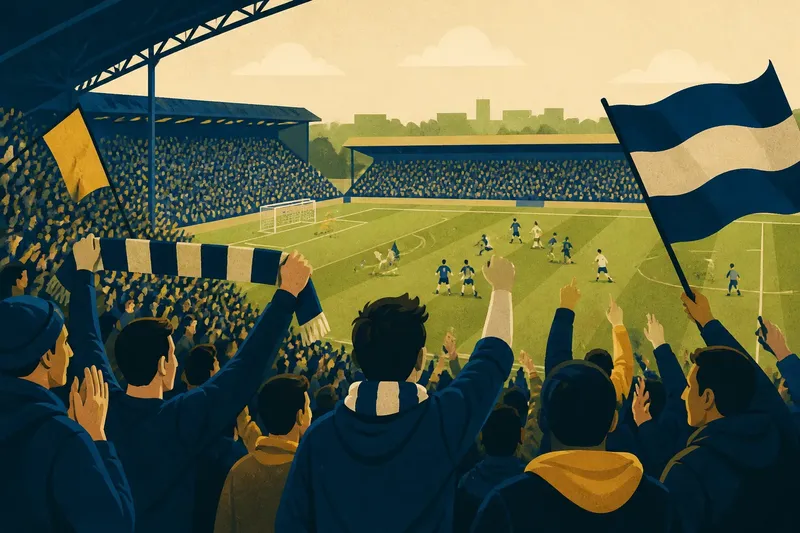
A terrace often gathered spectators in a continuous, sloping area facing the pitch. People could adjust their stance and shift position within the space, so their relation to the action was partly negotiated in the moment. Seating divides that shared plane into individual places, with rows and fixed directions doing more of the organising.
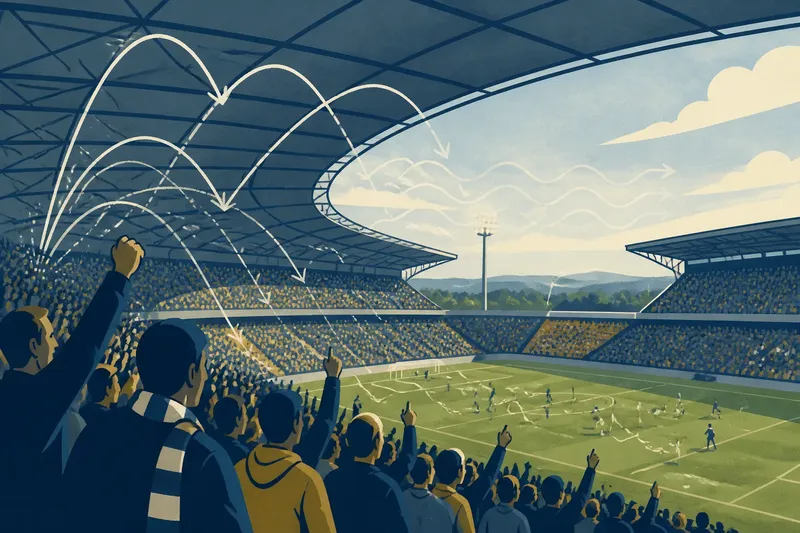
If the match feels distant from a seat, the cause may be the viewing angle rather than the distance alone. A spectator looking through heads, railings or the edge of a stand experiences a series of interruptions that can make the field seem less connected to their place. Try noticing which part of the view is blocked before deciding that the whole stand is poor: the obstruction may be limited to a particular sightline or moment of play.
Say you are in a seated block where the person in front leans forward whenever the ball reaches the near touchline. Your view is clear while play is central but disappears during attacks down that side. The practical response is to check the seat plan for a position with a different angle, or to ask the venue about accessible viewing options if the obstruction is persistent; repeatedly standing in a seated area may obscure the match for other people.
When a row feels like a boundary
On a terrace, a person could often move a little within the standing crowd, subject to the space and the people nearby. A seat assigns each spectator a defined spot. That can make it easier to locate companions and settle into a view, but it can also make the row feel like a boundary between one person’s experience and the next.
The boundary is most noticeable when people try to respond together. A wave of celebration may travel across a block, yet knees, armrests and the need to keep a place clear shape how it passes. Where standing is permitted, some spectators rise during a major moment; in a seated section, that same response can create an obstructed view behind them.
What to try first is simple: follow the local convention of the section. If people around you remain seated, a brief cheer or raised arm can share the moment without turning the row into an obstacle. If standing is part of the permitted arrangement, be aware of people behind you, especially anyone who may have difficulty seeing over a standing crowd. The point is not to police enthusiasm, but to recognise that a seat makes one person’s movement more likely to affect someone else’s view.
When friends cannot share the same rhythm
Terraces made it possible for groups to occupy a patch of space together, though no one should romanticise that arrangement: crowd density and movement could make it hard to hold a place or keep a group together. Seats offer named or numbered positions, which help companions find one another, but a row can split a group across several levels or sections.
That split changes how people participate. A chant may travel easily through a standing crowd because voices and gestures move across an open mass. In a seated block, people may be separated by aisles, railings and stairways; the same chant can feel local to one pocket rather than shared across the stand.
If your group wants to join in, start by reading the section rather than assuming every stand has the same customs. A small group can follow a chant that is already under way, or clap along without trying to command the whole block. If you are choosing seats together, check the venue’s seating map and booking options before purchase; a row shown as adjacent on a screen may not be the best fit for someone who needs an aisle or a clear route.
When moving through the stand becomes the main concern
A terrace’s open standing area allowed people to adjust their position, while fixed seats organise the crowd into rows separated by aisles and circulation routes. That does not mean movement was simpler on a terrace: a tightly packed crowd could restrict it. It means the movement is arranged differently. In a seated stand, reaching a place may involve passing others in a narrow row; leaving often means coordinating with neighbours who remain in their seats.
If a spectator keeps getting up, the problem may be a mismatch between their needs and the seat’s position, not poor manners alone. A central place in a row can make a quick exit disruptive, while an aisle seat may make movement less intrusive. For someone who expects to need frequent access to a concourse, it is sensible to consider that route when choosing a place, rather than relying on a quiet moment in the match.
Think of a spectator who has chosen a central seat and later realises they need to leave several times. On a future visit, they could look for an aisle position or ask the venue about suitable seating and access arrangements before booking. The observable difference is that the route out no longer requires the same repeated negotiation with seated neighbours.
When the crowd’s memory seems to change
A stadium is remembered through more than its outline. People recall where they stood with family, which part of a terrace carried a song, or how a particular view framed a decisive moment. When a terrace becomes a seated stand, these memories do not vanish, but their physical anchors can change: the old shared patch may become numbered rows, a new aisle or a differently arranged block.
This can make heritage feel contested. One spectator may value the old terrace as a place of collective expression; another may remember difficulty seeing, finding space or moving safely. A useful way to talk about the change is to be specific about what is remembered. Was it the closeness to the field, the ability to stand together, a familiar route, or the sound of voices around a particular part of the ground? Those details make room for different experiences without pretending that one layout suited everyone.
For a club or ground preserving its history, photographs and oral memories can be connected to the actual geometry of a stand: where the terrace ended, how the pitch was approached, and what later seating changed. This is more revealing than treating “the old ground” as a single image. It also helps newer spectators understand why an ordinary row or stairway may carry meaning for someone else.
What should you expect from a seated stand?
Does a seat always provide a better view?
No. A seat gives a defined viewing position, but its usefulness depends on the angle, obstructions and the action you most want to follow. A clear view of the centre may still leave a corner or touchline difficult to see.
Can spectators still stand during a match?
That depends on the ground, the section and the arrangements in force for that event. Follow the venue’s instructions and the established practice around you, since standing in a seated block can block the view behind.
Why do chants feel different in a seated section?
Rows, aisles and separated blocks can break up the movement of voices and gestures. A chant can still grow, but it may begin in a smaller group and spread differently from one carried through a continuous standing area.
How can I choose a place if I need to move easily?
Check the venue’s seating information for aisle access, step-free routes and any relevant accessible provision, then contact the venue if the map does not answer your question. A qualified access team can advise on arrangements that suit your needs.
When is it not worth chasing the old terrace feeling?
It is not worth expecting a seated stand to reproduce every quality of a terrace. A fixed place cannot offer the same freedom to shift within a crowd, and a standing section cannot provide the same clearly assigned spot. Trying to make one arrangement imitate the other can obscure what each actually asks of spectators.
Instead, notice what the ground currently makes possible: a reliable place to return to, a shared response across a block, a clear route, or a particular line of sight. The change from terraces to seats is easiest to understand when judged through these everyday interactions, not as a simple story of improvement or loss.
So when the difference catches your attention, ask what has changed between your body and the field: your angle, your freedom to move, your neighbours’ view, or the way a crowd gathers around a moment. From terraces to seats, the spectator’s place became more clearly assigned, but it never became just a number on a ticket. It remains a position in a crowd, shaped by the people beside you and the space that carries everyone’s attention towards the pitch.